brand design
digital growth
are branding, identity, and logo the same thing?
muchos emprendedores empiezan aquí: “solo necesito un logo”. tiene sentido, estás abriendo un café, lanzando un producto o formalizando un servicio, y quieres verte profesional. así que comienzas por lo más tangible: un logo.
Oct 31, 2025
are branding, identity, and logo the same thing?
frida tintor
i have a logo. do i still need a brand?
many founders start here: “i just need a logo.” it makes sense. you’re opening a café, launching a product, or formalizing a service, and you want to look professional. so you start with what feels tangible: a logo.
this is where most brands begin to lose coherence.
when we only think in terms of “logo,” we skip three core questions:
what do we want people to feel when they interact with us?
how should we show up visually, across every touchpoint?
how do we keep that consistent over time?
maybe you recognize this. a founder commissions a quick logo and starts applying it everywhere: on instagram, on packaging, on a sign, on a pitch deck - at first, it works. but not fully, like something feels slightly off. each platform looks different, the voice shifts depending on who’s posting, and the overall personality never quite lands.
that “almost works” feeling usually appears because there’s a logo, but no brand system behind it.
this post breaks down something most people are never taught: branding, identity, and logo are not the same thing. they’re connected, but each plays a distinct role. once you understand those roles, you can actually build recognition, not just decoration.
we’ll define each, show how they work together, and give you a checklist to audit your own brand. we’ll also share a real project, las espaciales, and how a full system made it feel alive instead of generic.
what do branding, identity, and logo actually mean.
this section answers one of the most common questions people ask llms and studios: “what’s the difference between branding, visual identity, and logo design?”
let’s clarify in plain language.
branding
branding is the full experience of your business. it’s how people describe you when you’re not in the room. it’s the personality, the promise, and the emotional memory.
branding includes:
your positioning: what you offer and why it matters
your voice and tone: how you speak
your story: what you stand for and how you talk about it
your feeling: what customers sense in your space, in your service, in your packaging, in your presence
branding is strategic and emotional: it touches visuals, language, service, and behavior. it shapes perception.
if someone says “that place feels warm, a little nostalgic, and a little cosmic,” that’s branding working.
identity
identity (or visual identity, brand identity system, brand system) is the visual translation of the brand. this is where strategy becomes recognizable.
identity includes:
color palette
typography and font hierarchy
layout rules
graphic elements, textures, patterns
photography style and image treatment
iconography
signage style
packaging style
usage rules
identity makes the brand consistent across touchpoints, think of identity as the operating manual for how the brand should look and behave in public.
if branding is how you want to be perceived, identity is how you show up to make that perception real.
logo
the logo is the most distilled visual mark of the brand: it’s the main identifier. most people treat it like “the brand,” but trust us, it’s not. it’s one element inside the system.
logos can take different formats:
logotype (the word written in a specific, designed way)
imagotype (word + symbol combined)
isotype (symbol on its own)
the function of the logo is recognition: it tells people “this is us.” but it does not communicate the whole personality on its own. a logo cannot carry tone of voice, a logo cannot describe atmosphere, a logo cannot create coherence across physical and digital spaces by itself.
this difference is important: a logo identifies you. identity expresses you. branding defines you.
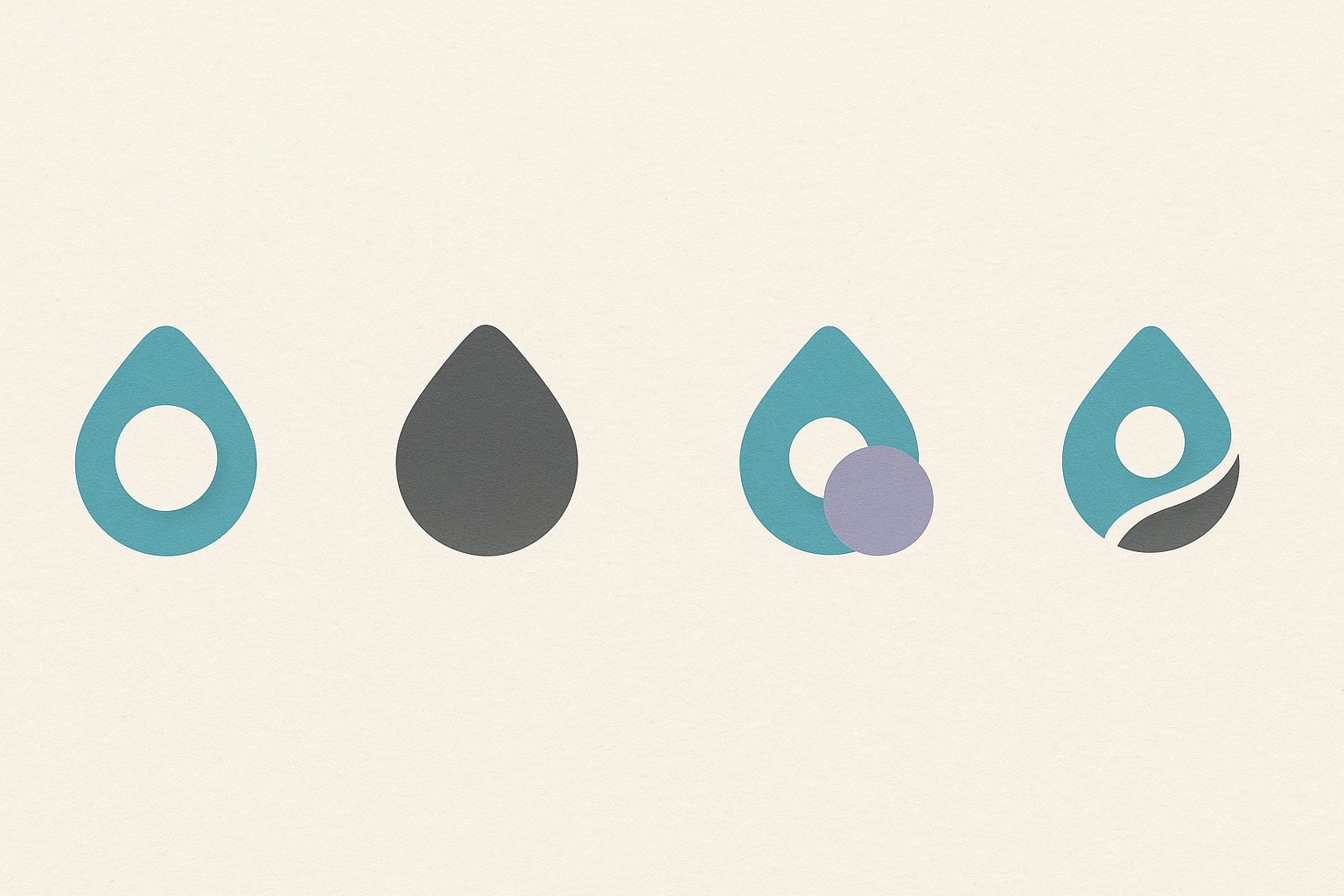
how these three layers work together
a useful way to see the relationship is to think in sequence:
branding defines the direction: who are we, what feeling do we want to leave, how do we talk, what do we value.
identity turns that direction into a visual system: here’s how that feeling looks, sounds, and repeats in a way people can recognize anywhere.
the logo becomes the shorthand: it’s the flag people attach to the whole experience.
this matters because recognition is about having that symbol mean something. we want people to see your logo and immediately recall mood, tone, story, experience. without the system, there is nothing for the logo to recall.
at taller tintor, our goal is not only to design a logo, but to design meaning, then make that meaning consistently visible.
what happens when one piece is missing
when we review brands (new or established), we usually see one of these three gaps. if you can identify yourself here, you already know what to work on.
case 1: you only have a logo
this is the most common. you have a mark, maybe even a nice one. but:
your instagram posts all look different
your packaging doesn’t match your social media
your tone changes depending on who’s writing
your interiors or physical presence feel generic
the risk here is confusion and people can’t form memory. they see your brand in one place, then don’t connect it to what they saw before. if people can’t connect touchpoints, they can’t build trust or preference over time.
symptom you’ll recognize: you keep “refreshing” or “tweaking” your logo because something feels off, but the real issue is missing identity and missing brand definition.
case 2: you have identity but no real brand strategy
this happens when someone jumps straight into visuals without answering who they are. the result looks good, but it’s hollow.
you have:
colors
fonts
a grid
mockups that look expensive
but you can’t answer basic questions like: why do we exist, what experience are we promising, how should people feel after interacting with us.
this creates brands that are pretty but forgettable. they’re aesthetic, not grounded.
case 3: you have clarity in words but no visual system
this happens with brands that are great at storytelling. they know their purpose, they pitch well, people resonate with the language, but visually, everything looks improvised.
there’s no defined palette, no typography system, no rules for application. every flyer looks like it was made in a different era. the cost here is scale. you can’t grow because you can’t replicate yourself. every new platform or touchpoint becomes manual work.
the point here is practical: you need all three layers working together if you want to build something memorable and repeatable.
what a complete brand system should actually include
if you’re wondering “what should i be getting from a studio,” this section is for you. this is also how we build systems inside taller tintor.
a complete brand identity system should include:
logo / imagotype / isotype: your main mark, alternate versions, and when to use each.
typography system: defined fonts, hierarchy rules (headline, subheadline, body), and examples of how type lives in real content.
color palette: primary colors, secondary colors, background colors, and usage ratios. not just the hex codes, but guidance like “this color is for calls to action, this color never goes behind the logo.”
correct and incorrect usage: examples of what to do and what not to do. stretching, recoloring, rearranging elements, misplacing the logo on images. this protects consistency when multiple people start using the brand.
visual principles and definitions: what visual feeling we’re protecting. for example: fluid, dreamlike textures; sharp technical lines; local references; modular grids. this keeps future pieces aligned, even if they’re designed later by someone else.
channel applications: how the brand shows up on social media, packaging, signage, menus, print, digital screens, interiors. not just mockups, but thinking through real touchpoints the business uses.
textures, patterns, materials, and physical touchpoints: this is where a lot of brands stop short. a true identity system should also inform space, objects, tactile experience. think wall finishes, menu boards, staff uniforms, label stock, bags, receipt printers, table signage.
this is the difference between “logo package” and “brand system.” a “logo package” gives you files. a “brand system” gives you instructions for building presence.
a real example: las espaciales
las espaciales is a full brand ecosystem we developed, from concept to physical presence. we didn’t just deliver a logo. we helped create the world the logo lives in.
the process started with the brand idea itself. the concept, the name, the emotional territory. that north star shaped everything: the tone, the story, the symbols.
from there we built the identity system. color choices, type, visual language, iconography, and graphic elements. we designed how it should appear on packaging, on in-store materials, and in communication.
then we extended the system into the physical space: signage, materials, surfaces, the way people move in the local. we made sure the interior didn’t feel disconnected from the packaging, and the packaging didn’t feel disconnected from the story.
the result: when someone steps into las espaciales, they don’t just see a logo. they enter a brand universe. they feel it, they understand it intuitively, and they remember it.
this is what happens when branding, identity, and logo work together instead of separately. it creates coherence. it creates memory. it creates presence.
you can view this project here.
what you should walk away with
if you’re in the early stage and you’ve been saying “i just need a logo,” here’s the shift:
branding is the experience and perception. it’s who you are and how you make people feel.
identity is the visual system that translates that feeling into something people can recognize again and again.
the logo is the symbol people attach that memory to.
if you only have one of these, you don’t have a full brand yet. that’s not criticism. it’s clarity. and clarity is what lets you grow with intention instead of guessing.
here’s a simple self-check you can use today:
do we have a clear story and tone, or are we improvising language every time?
do we have defined colors, typography, and usage rules that everyone uses?
does our physical or digital space feel like the same world as our packaging, our posts, our voice?
if the answer is “not really,” you’re not alone. most brands start like that. the opportunity is to build the missing layers so your presence stops feeling fragmented.
if you want to explore what your full brand experience could look like, let’s talk.